Fiber Laser Cutting Machine for Metal Fabrication: How to Choose the Right One
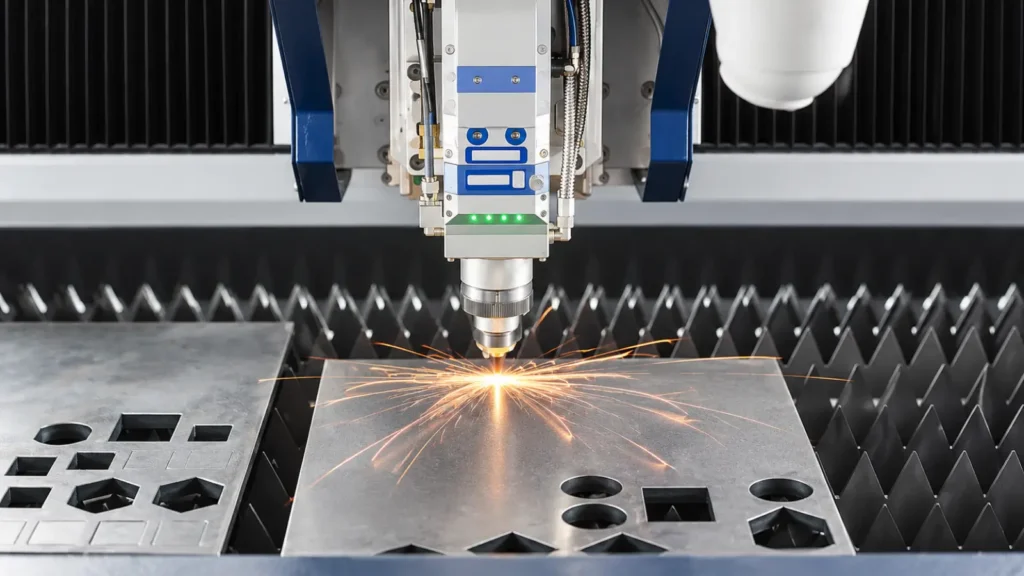
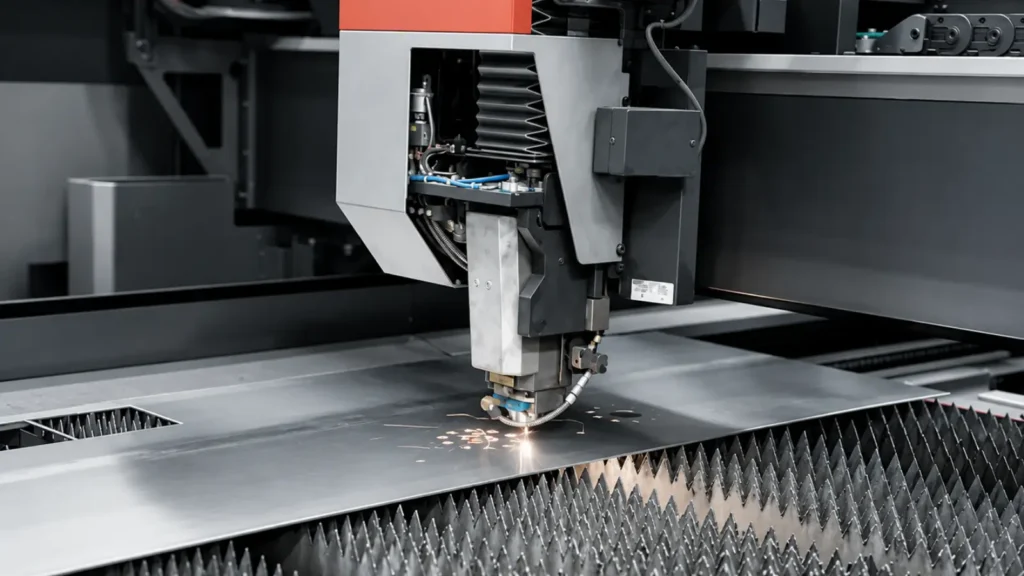
A fiber laser cutting machine is one of the most widely used metal cutting solutions for modern fabrication shops. It can cut carbon steel, stainless steel, aluminum, galvanized steel, brass, copper, and other metal materials with high speed, narrow kerf, and flexible processing capability.
However, choosing the right machine is not only about laser power or maximum cutting thickness. A suitable metal laser cutting machine should match your real materials, common thickness range, production volume, cutting quality requirements, and long-term operating cost.
This guide explains the key points to check before buying a fiber laser cutting machine for metal fabrication.
1. Confirm the Materials You Need to Cut
The first step is to list your main materials. Different metals require different cutting processes.
Carbon steel is commonly cut with oxygen, nitrogen, or compressed air. Oxygen can help cut thicker carbon steel because the oxidation reaction adds heat, but the cutting edge usually has an oxide layer.
Stainless steel is often cut with nitrogen when a bright, low-oxidation edge is required. This is important for kitchen equipment, food machinery, elevator parts, electrical cabinets, and stainless steel enclosures.
Aluminum, brass, and copper are more reflective than carbon steel and stainless steel. If you cut these materials regularly, the machine should have a suitable laser source, back-reflection protection, a stable cutting head, and tested process parameters.
A reliable supplier should not simply say that one machine can cut all metals perfectly. Cutting results depend on material grade, surface condition, thickness, gas type, laser power, nozzle, focus position, and cutting speed.
2. Do Not Choose Only by Maximum Cutting Thickness
Many buyers focus too much on maximum cutting thickness. This is risky.
Maximum thickness only shows the limit under certain conditions. It does not always mean the machine can cut that thickness with high speed, stable quality, low dross, and economical cost.
When choosing a CNC laser cutting machine, separate cutting ability into three levels:
| Cutting Range | Meaning |
|---|---|
| Maximum cutting thickness | The thickest material the machine can cut through under specific conditions |
| Quality cutting thickness | The range where edge quality and cutting stability are better |
| Economic cutting thickness | The range suitable for daily production with good speed and reasonable cost |
For most factories, economic cutting thickness is more important than maximum cutting thickness.
If most of your orders are 1–8 mm sheet metal, the machine should perform well in that range. If you regularly cut medium and thick plates, then higher laser power and stronger machine structure become more important.
3. Choose the Right Laser Power
Laser power affects cutting speed, thickness capacity, piercing performance, and machine price. Common power options include 1.5 kW, 3 kW, 6 kW, 12 kW, 20 kW, 30 kW, and higher.
A simple selection guide is:
| Laser Power | Suitable Application |
|---|---|
| 1.5–3 kW | Thin sheet metal cutting and entry-level production |
| 4–6 kW | General sheet metal fabrication |
| 12 kW | Medium-thick plate cutting and higher productivity |
| 20 kW and above | Heavy-duty cutting and high-volume industrial production |
Higher power is useful only when your production needs it. If your factory mainly cuts thin sheets, very high power may not reduce your total cost. If you cut thick plates every day, low power may reduce efficiency and increase labor time.
The best choice is not always the highest power. The best choice is the power that covers most of your daily orders with stable quality and reasonable cost.
4. Compare Machine Structure
Fiber laser cutting machines usually come in open-type, fully enclosed, exchange table, large-format, plate-and-tube, and tube cutting structures.
An open-type machine is usually more affordable and suitable for small workshops, entry-level buyers, and lower-volume sheet metal cutting. It is simple to operate and easy to load manually.
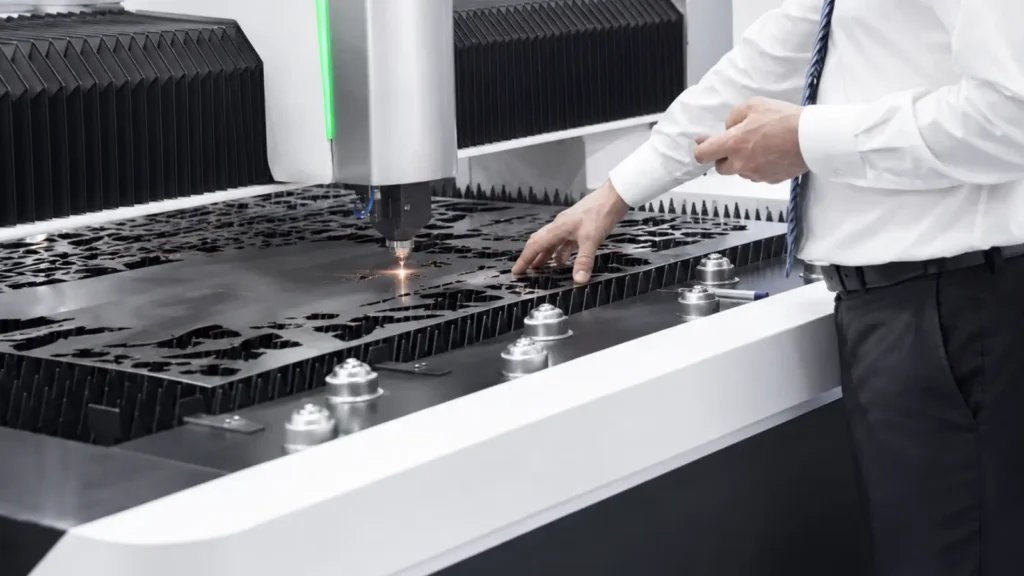
A fully enclosed exchange table machine is more suitable for medium and large factories. It offers better protection, better dust control, higher loading efficiency, and stronger automation potential.
For companies that need safer operation, cleaner workshop conditions, and continuous sheet metal production, a fiber laser cutting machine with a fully enclosed exchange table structure is often a stronger long-term choice.
The exchange table allows one sheet to be cut while another sheet is loaded or unloaded. This reduces waiting time and improves real production efficiency.
5. Check Cutting Quality, Not Just Speed
Cutting speed is important, but it should not be separated from cutting quality.
A good industrial laser cutter should provide stable edge quality, narrow kerf, small heat-affected zone, accurate holes, and repeatable cutting results.
Important factors that affect cutting quality include:
- Laser power
- Beam quality
- Cutting head performance
- Auxiliary gas type and purity
- Gas pressure
- Nozzle condition
- Focus position
- Plate flatness
- Material surface quality
- Cutting parameters
No machine can guarantee perfect, burr-free cutting on every material and thickness. A more realistic standard is low-burr, stable, and consistent cutting under suitable material, gas, and process conditions.
Before purchasing, ask the supplier to cut samples using your real material, thickness, and drawing.
6. Consider Gas and Operating Cost
The cost of a laser cutting machine is not only the purchase price. Operating cost also matters.
Common operating costs include:
- Electricity
- Oxygen
- Nitrogen
- Compressed air
- Protective lenses
- Nozzles
- Ceramic rings
- Chiller maintenance
- Dust collector filters
- Operator labor
- Machine downtime
Nitrogen cutting can produce cleaner stainless steel edges, but gas consumption can be high. Oxygen cutting is common for carbon steel, but the edge usually oxidizes. Compressed air can reduce cost in some thin sheet applications, but edge quality must be tested.
When comparing machines, calculate the cost per qualified part, not only the machine price.
7. Plan Automation According to Production Volume
Automation is useful when production volume is high or labor cost is a concern.
Common automation options include automatic loading, automatic unloading, sheet storage tower, automatic nozzle changer, nozzle cleaning system, part sorting, and MES connection.
For high-power laser cutting equipment, automation is especially important. If the machine cuts quickly but workers load and unload slowly, the real production capacity will still be limited.
Small workshops may start with manual loading. Larger factories should consider exchange tables, loading systems, and future automation from the beginning.
8. Ask These Questions Before Buying
Before choosing a metal laser cutting machine, ask these questions:
- What materials do we cut most often?
- What thickness range covers most daily orders?
- Do we need low-oxidation stainless steel edges?
- Do we cut aluminum, brass, or copper?
- What sheet size do we use?
- How many hours per day will the machine run?
- Do we need open type, enclosed type, or exchange table?
- What gas supply system do we have?
- Do we need automatic loading or unloading?
- Can the supplier provide sample cutting?
These questions help avoid buying a machine that looks good in a catalog but does not fit real production.
FAQ
What is a fiber laser cutting machine used for?
A fiber laser cutting machine is used to cut metal sheets, plates, tubes, and structural parts. It is common in sheet metal fabrication, machinery manufacturing, electrical cabinets, kitchen equipment, automotive parts, and metal processing services.
Can a fiber laser cutting machine cut stainless steel?
Yes. Stainless steel is one of the most common materials for fiber laser cutting. Nitrogen is often used when a bright, low-oxidation edge is required.
Can fiber laser cut aluminum and copper?
Yes, but aluminum and copper are reflective metals. The machine should use suitable laser source protection, cutting head configuration, and tested cutting parameters.
What laser power should I choose?
It depends on your main material and thickness range. Thin sheet production may use 1.5–3 kW. General fabrication often uses 4–6 kW. Medium and thick plate production may require 12 kW or higher.
Conclusion
Choosing the right fiber laser cutting machine requires a practical evaluation of materials, thickness, laser power, machine structure, cutting quality, gas cost, automation, and service support.
Do not choose only by maximum cutting thickness or the lowest price. The right machine should match your daily production, provide stable cutting quality, and help reduce the cost per qualified part.
For most metal fabrication companies, the best choice is the machine that covers their common materials and thickness range efficiently, while leaving enough capacity for future production growth.