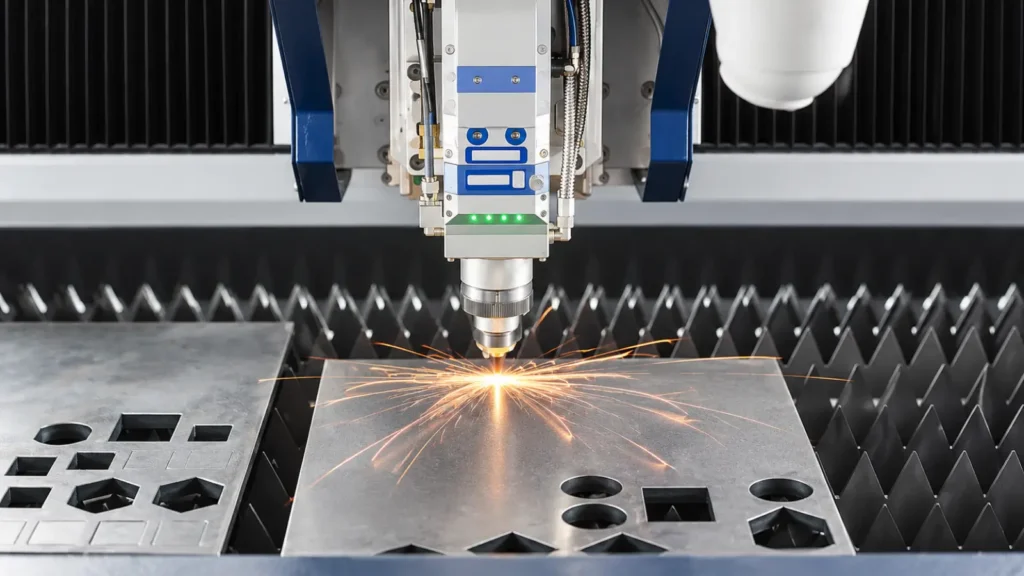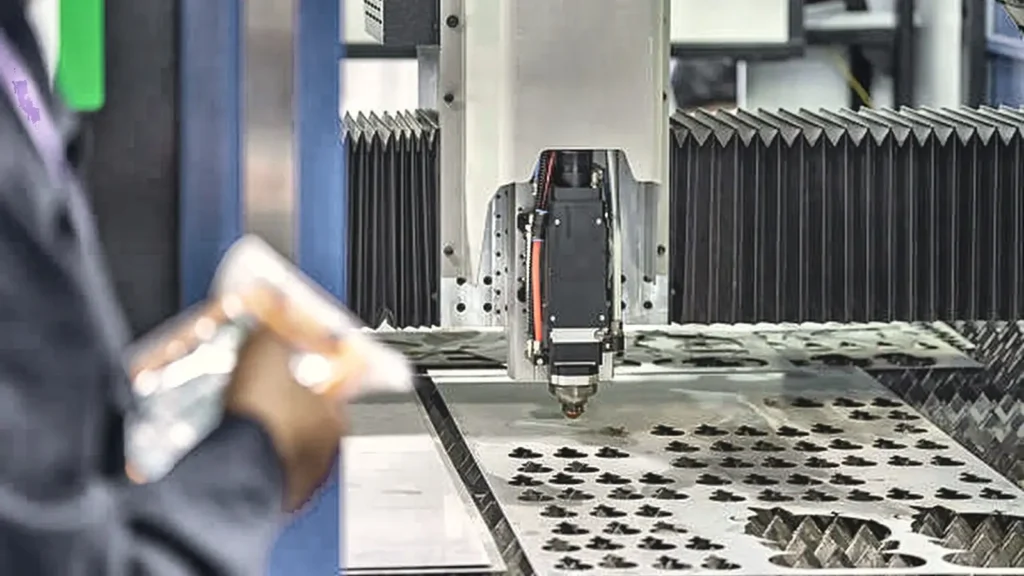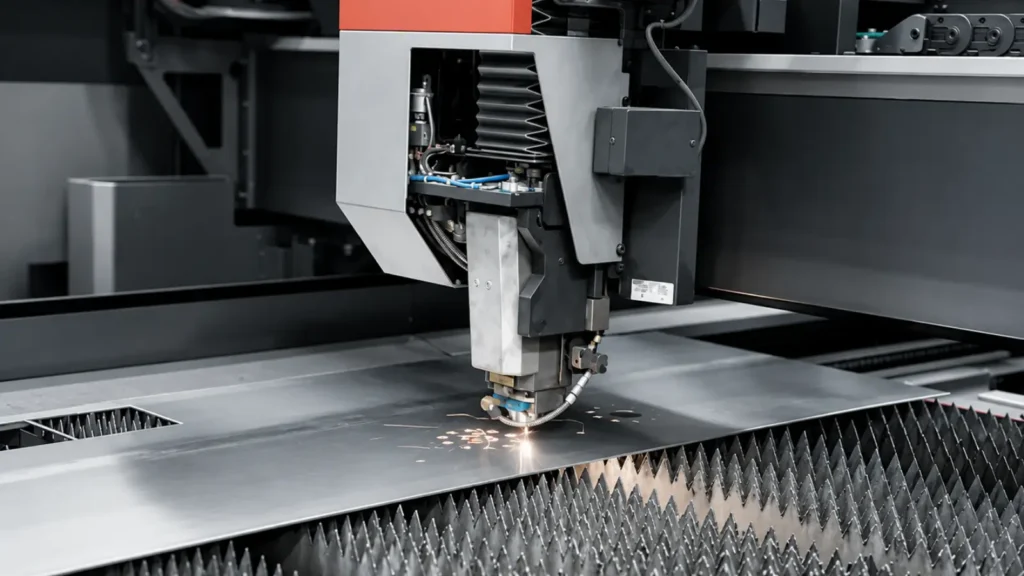
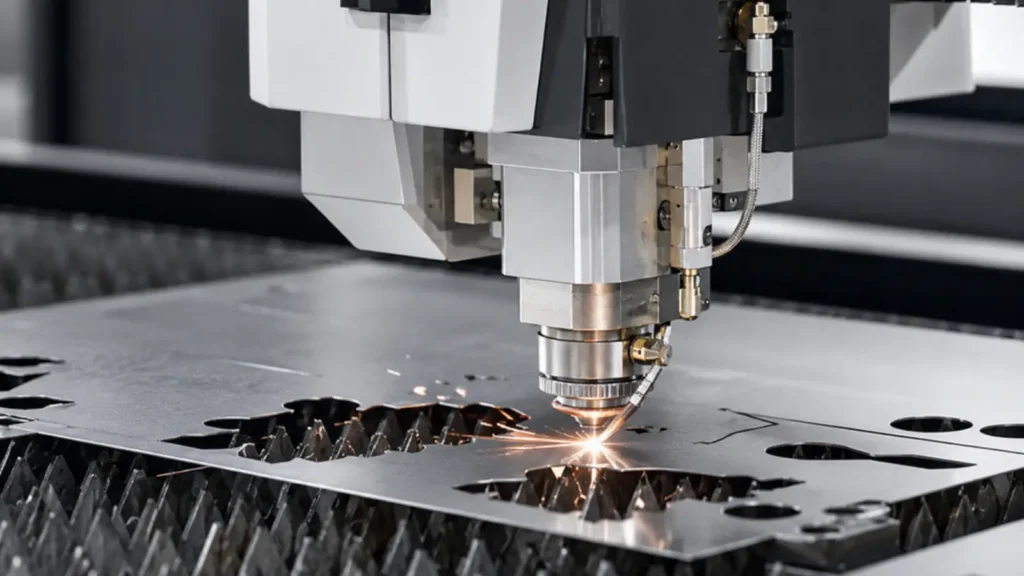
Large Format Laser Cutting Machine Guide
Large format laser cutting machines are specialized for oversized metal plates and long heavy-duty parts. They are widely used in heavy industrial manufacturing. Typical application scenarios include steel structure processing, engineering machinery, ship fabrication, mining equipment and energy facility production.
Standard laser cutters adopt fixed small working tables and cannot process extra-long workpieces. Large format laser machines feature extended working areas in both length and width. They complete one-time forming cutting for large parts, eliminate repeated positioning errors and greatly improve production consistency.
1. What Is a Large Format Laser Cutting Machine?
A large format laser cutting machine is professional equipment customized for oversized metal sheets. Its working length can reach 6 meters, 8 meters, 12 meters or longer. It perfectly solves the processing problem of workpieces that exceed the size limit of standard cutting machines.
It is mainly used for processing various heavy industrial core components. Common products include steel structure accessories, machine tool frames, large support plates and bridge parts. It also supports customized cutting for heavy equipment panels, construction machinery components and energy equipment accessories.
The core advantage of large format machines is not only the larger cutting range. More importantly, it reduces repeated clamping and secondary processing procedures. It effectively stabilizes the processing quality of oversized metal parts and improves overall production efficiency.
2. Why Large Working Area Is Indispensable
Oversized metal plates are heavy and cumbersome. They are difficult to move and position accurately. Processing large plates on standard machines requires multiple cutting operations. This not only causes positioning deviations but also increases manual workload and production errors.
A complete large working area brings multiple practical production advantages. It realizes one-piece integral cutting of full-size plates and avoids splicing and welding joints. It reduces positioning errors in secondary processing and ensures uniform part size and shape.
In addition, it simplifies the production workflow and reduces repeated material handling steps. For factories that process long plates and large structural parts in batches, large format machines are the core equipment to improve production capacity.
3. How to Select Appropriate Laser Power
Large format machines are mainly used for medium and thick plate cutting. Laser power directly determines cutting speed, piercing ability and processing stability.
High laser power can improve production efficiency for thick plates, but it will increase equipment cost, power consumption and auxiliary gas cost. Blindly pursuing ultra-high power will cause unnecessary waste for conventional thin and medium plate processing.
The common processing materials of large format equipment cover carbon steel, stainless steel, aluminum alloy, wear-resistant steel and structural alloy steel. Different materials adopt matched processing schemes.
Oxygen cutting is suitable for thick carbon steel to ensure stable piercing and cutting. Nitrogen cutting is preferred for stainless steel and aluminum alloy to obtain smooth, low-oxidation edges. Always match laser power and auxiliary gas according to your actual material thickness and quality requirements.
4. Machine Bed Strength Guarantees Long-Term Precision
Large format laser machines bear super-heavy metal plates and long-term high-load operation. The machine bed structure is the core factor that determines long-term processing accuracy and equipment stability.
Qualified large-format machine beds adopt heavy-duty integral welding technology. They undergo professional stress relief treatment and high-precision finishing. Equipped with reinforced guide rails, stable gantry structure and high-load bearing design, they adapt to long-term heavy industrial processing.
It is not reliable to judge quality by simple slogans such as no deformation. You need to focus on structural design and stress elimination technology. These key processes prevent bed deformation during long-term operation.
A deformed machine bed will cause cutting deviation and inconsistent part size. It increases defective products and greatly shortens the service life of the laser machine.
5. Dust Extraction and Waste Handling Design
Large-scale plate cutting produces a large amount of smoke, metal sparks and slag. Ordinary dust removal systems cannot meet production needs. Professional supporting dust extraction equipment is essential.
High-quality large format machines are equipped with sectional dust extraction and large-air-volume smoke removal systems. They support efficient smoke collection, centralized slag recovery and fire risk control. Some models are equipped with intelligent spark detection devices for safer production.
Insufficient dust extraction will lead to smoke accumulation in the workshop. It will pollute precision components such as protective lenses and guide rails, reduce cutting stability and increase daily maintenance frequency.
Reasonable slag and scrap processing structures simplify manual cleaning work. They effectively support continuous batch production and improve workshop operation efficiency.
6. Automation and Large Plate Material Handling
The biggest difficulty of large plate processing is not cutting speed, but material handling. Manual loading and unloading is inefficient and restricts overall production capacity.
Matching automation configurations can effectively solve this problem. Factories can choose heavy-duty loading systems and crane matching devices for fast plate handling. Automatic unloading, intelligent part marking and bevel cutting functions meet diversified processing needs.
In addition, professional large-format nesting software and MES system connection realize intelligent batch production. Part marking can mark product information on workpieces, which facilitates subsequent welding, bending and assembly, and avoids part mixing and sorting errors.
7. FAQ
Who needs a large format laser cutting machine?
Factories that process oversized metal plates, long structural parts and heavy machinery components need this equipment. It is widely applicable to steel structure factories, heavy equipment manufacturing plants and large-scale metal processing centers.
Does large format cutting require high laser power?
It does not require high power in all cases. The power selection depends on your actual material type and plate thickness. A large working table does not mean ultra-high power is necessary.
Why is machine bed strength so important?
Large metal plates have heavy weight and bring long-term load pressure to the equipment. A high-strength stable bed avoids deformation, maintains long-term cutting accuracy and reduces equipment failure rates.
8. Conclusion
Large format laser cutting machines are professional equipment for heavy industrial oversized part processing. They make up for the size limitation of standard laser cutting equipment and solve various processing difficulties of long and large metal parts.
When purchasing equipment, do not only focus on the working table size. You need to comprehensively evaluate laser power, bed stability, load capacity, dust extraction performance and automation functions.
A reasonably matched large format laser machine can reduce secondary processing procedures, stabilize product quality and significantly improve the production efficiency of heavy metal fabrication enterprises.