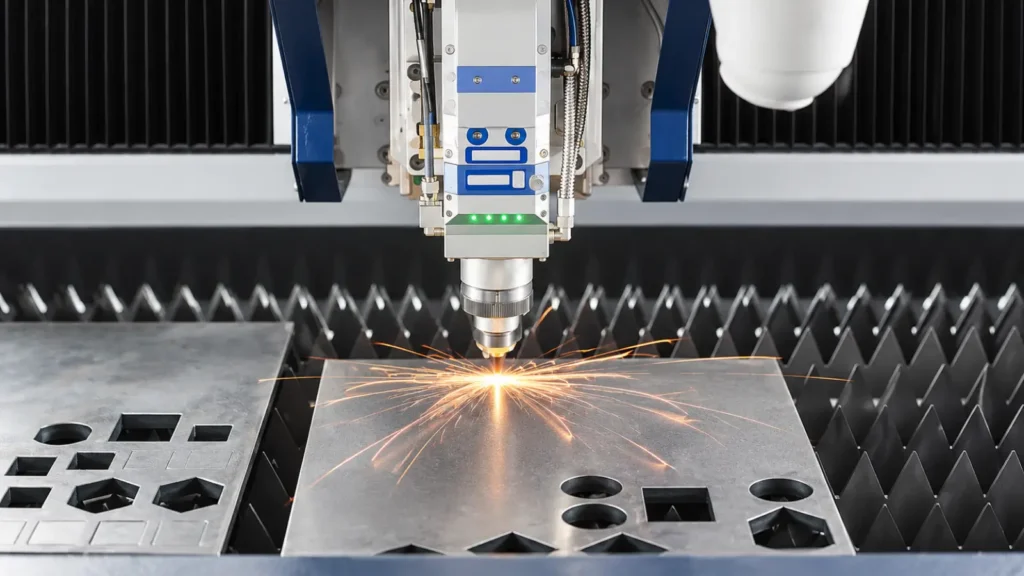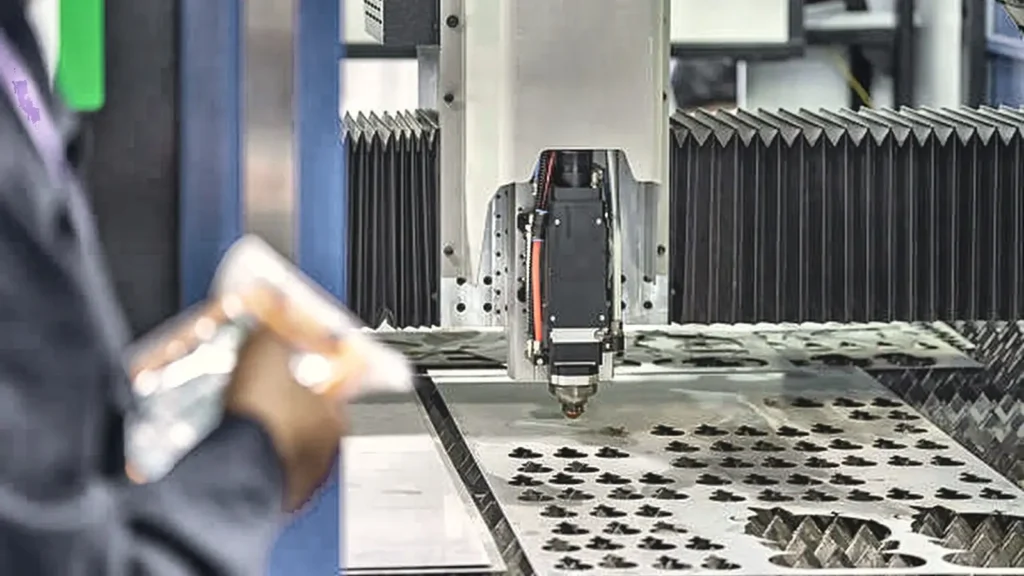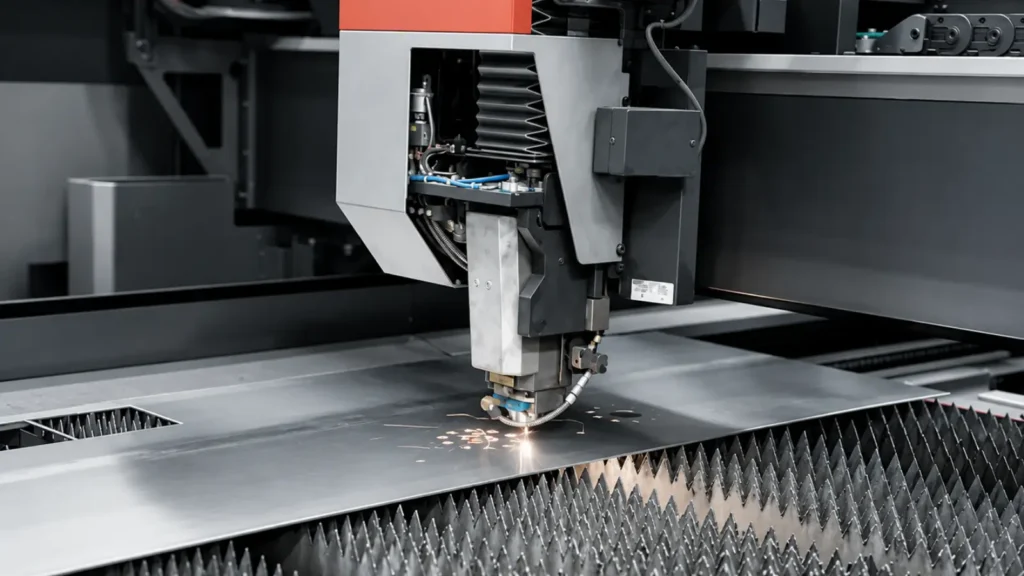
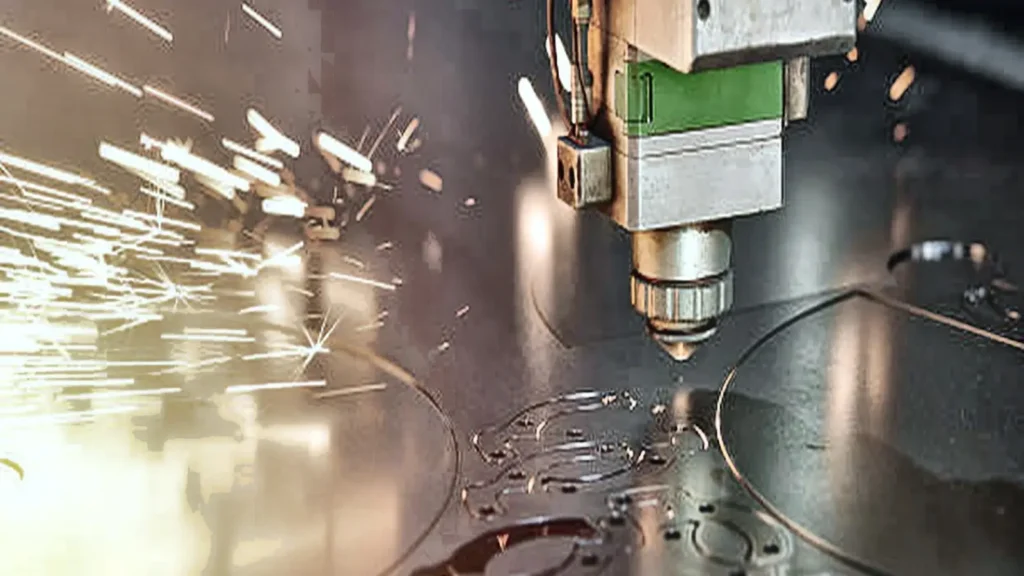
How to Choose the Right Fiber Laser Cutting Machine for Sheet Metal Fabrication
Many factory owners make the same mistake. They choose fiber laser cutting machines only by laser power. High power does not always mean better quality, lower cost or faster production.
The best laser cutter fits your real production needs. It must match your daily materials, plate thickness, order volume and factory conditions.
This guide helps you pick the right sheet metal laser cutter with simple, practical rules.
1. Check Your Main Cutting Materials
First, confirm the metals you cut every day. Common sheet metals include carbon steel, stainless steel, aluminum, brass and copper.
Each metal needs different cutting settings.
Carbon steel uses oxygen or nitrogen. Oxygen improves cutting speed for thick steel but leaves an oxidized edge.
Stainless steel needs high-purity nitrogen. It creates a clean, bright edge for cabinets, kitchen parts and decorative metal.
Aluminum, brass and copper are hard to cut. They reflect laser light easily. If you process these metals often, choose a machine with anti-reflection protection and stable cutting parts.
2. Focus on Usable Cutting Thickness
Do not only look at the maximum cutting thickness. This is a common buyer error.
Max thickness is just a theoretical limit. It cannot guarantee stable, low-cost daily production.
You need to focus on two practical thickness ranges.
First, quality cutting thickness. This range delivers smooth edges and no metal burrs.
Second, economic cutting thickness. This range saves gas and power costs for long-term work.
If most orders are 1–8 mm metal, you do not need ultra-high power. Choose a machine optimized for your regular thickness.
3. Select Suitable Laser Power
Laser power decides cutting speed and plate capacity. Here is a simple power guide for sheet metal work.
1.5kW to 3kW works for thin sheets and small workshop production.
4kW to 6kW fits most standard sheet metal fabrication jobs.
12kW is ideal for fast medium and thick plate processing.
20kW and above supports large-scale, high-output factory production.
Remember, power is not everything. Cutting quality also depends on machine stability, gas quality and cutting head condition.
4. Pick the Right Machine Structure
Two machine types fit different factory sizes.
Open single-table machines are cheap and easy to load manually. They suit small workshops and thin metal cutting. But they have weak safety and poor dust control.
Fully enclosed exchange table machines are better for medium and large factories.
Dual exchange tables greatly boost efficiency. Workers load new sheets outside while the machine cuts inside. This removes idle time and supports continuous production.
Closed designs also offer better laser safety and cleaner workshop conditions.
5. Prioritize Cutting Quality Over Speed
Fast cutting speed is useless with poor quality.
A good laser cutter delivers stable results every day. Key quality signs are narrow cutting gaps, small heat-affected areas, few burrs and accurate part sizes.
No machine produces perfect burr-free cuts for all metals. Material quality, gas pressure and cutting speed all affect results.
The best way to check quality is testing your own material samples before purchase.
6. Inspect Machine Bed and Motion System
A solid machine bed ensures long-term precision. High-speed cutting needs a rigid, anti-deformation frame.
High-quality machines use thick welded steel and professional stress relief treatment. They avoid shape changes after years of work.
The motion system also matters. Precision rails, servo motors and stable drive systems keep cuts accurate.
Do not trust empty positioning speed data. Always ask for real cutting speed for your materials.
7. Check CNC System and Software
Good control software saves your time and material cost.
Useful functions include automatic nesting, kerf compensation, multi-stage piercing and remnant plate management.
It should support quick file import and stable batch production. The best system lets new operators get consistent cutting results easily.
8. Calculate Long-Term Operating Costs
Gas and power costs take up most daily spending.
Oxygen suits thick carbon steel cutting. Nitrogen creates clean edges for stainless steel and aluminum. Compressed air lowers costs for thin sheet work.
Do not only compare machine prices. Calculate long-term costs of gas, nozzles, protective lenses and electricity. A cheap machine may cost more to run every year.
9. Never Ignore Safety and Dust Removal
Laser cutting produces metal smoke, dust and sparks. These harm workshop environment and worker health.
Quality machines have full enclosure doors, emergency stop buttons and sectional dust extraction systems. Good safety design avoids laser radiation risks and keeps the workshop clean.
10. Match Automation to Your Production
High-speed cutting needs matching automation. Manual loading will slow down fast laser machines.
Basic dual exchange tables improve continuity. Advanced automation includes auto loading, nozzle changing and part sorting.
Automation cuts labor cost and supports long-hour unmanned production for large factories.
11. Choose Based on Your Industry
Different industries need different machine features.
Job shops need flexible machines for mixed materials. Electrical cabinet production needs precise thin-sheet cutting. Kitchen hardware requires perfect stainless steel edge quality. Construction machinery needs strong thick-plate cutting ability.
Always match machine functions to your main products.
Final Conclusion
Choosing a fiber laser cutting machine is simple. Do not chase the highest power blindly.
Small workshops can choose cost-effective open-type machines. Large factories should pick fully enclosed exchange table models for long-term stability and safety.
The best machine fits your daily materials, common thickness, order volume and budget. Always test real cutting samples and check after-sales service before buying. This helps you avoid wrong purchases and maximize your production profit.