Aluminum Laser Cutting Machine: Key Buying Tips
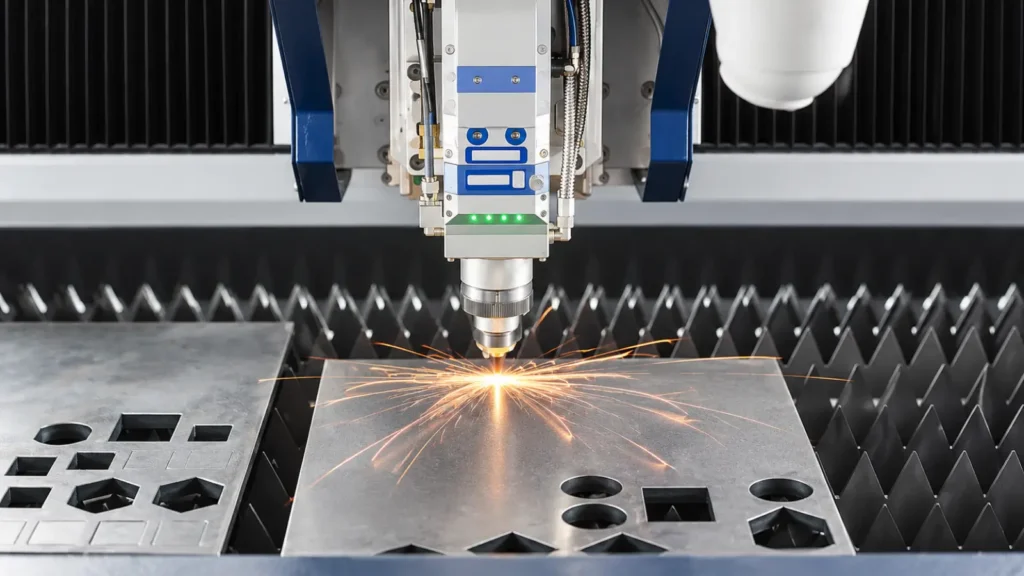
An aluminum laser cutting machine is used for aluminum sheets, aluminum alloy parts, machinery covers, transportation parts, electrical equipment, decoration panels, and industrial components. Aluminum can be processed by fiber laser cutting, but it is more demanding than carbon steel and stainless steel.
The reason is simple: aluminum is reflective and conducts heat quickly. This means buyers must pay attention to laser source protection, cutting head stability, auxiliary gas, laser power, and sample testing before purchasing.
Why Aluminum Cutting Is Different
Aluminum reflects more laser energy than carbon steel and stainless steel. It also transfers heat quickly. These properties can affect piercing, edge quality, and cutting stability.
Common aluminum materials include:
- Pure aluminum
- 5052 aluminum alloy
- 6061 aluminum alloy
- 6063 aluminum alloy
- Aluminum-magnesium alloy
- Aluminum sheet
Different aluminum grades may cut differently. Surface condition, oxide layer, plate flatness, and thickness can all affect the result.
A supplier should not simply promise that all aluminum alloys can be cut perfectly. Aluminum cutting ability must be confirmed according to real material grade and thickness.
Choose a Machine With Back-Reflection Protection
Because aluminum is reflective, the machine should use a suitable laser source with back-reflection protection. The cutting head and optical path should also be designed for stable cutting.
Important configuration points include:
- Fiber laser source suitable for reflective metals
- Stable automatic focusing cutting head
- Protective lens monitoring
- Proper nozzle selection
- Gas pressure control
- Tested piercing parameters
- Correct focus position
For regular aluminum production, do not choose a machine only by price. A low-cost configuration may not provide stable results on reflective metals.
Select the Right Laser Power
Laser power affects aluminum cutting thickness and speed. Thin aluminum sheets may not require very high power, but thicker aluminum plates need stronger laser power and better process control.
A general selection guide is:
| Production Need | Suggested Direction |
| Thin aluminum sheet | Entry or mid-power machine may be enough |
| Mixed aluminum and steel work | General fabrication power range may be suitable |
| Medium-thick aluminum plate | Higher power and stronger gas system are needed |
| Batch aluminum production | Consider exchange table and automation |
The correct choice depends on your main thickness range. Do not choose power only by maximum cutting thickness. Economic cutting thickness is more useful for real production.
Choose the Right Auxiliary Gas
Aluminum is often cut with nitrogen, compressed air, or mixed gas depending on edge quality and cost requirements.
Nitrogen can help reduce oxidation and improve edge appearance, but gas consumption may be high. Compressed air may reduce cost in some applications, but edge color and burr condition must be tested.
Before production, confirm:
- Gas type
- Gas pressure
- Gas purity
- Nozzle size
- Cutting speed
- Edge quality
- Burr condition
- Downstream welding or coating needs
If your parts require high-quality welding after cutting, the gas choice and edge condition become more important.
Check Cutting Quality With Samples
Sample cutting is especially important for aluminum.
Ask the supplier to test your real material, not only a standard sample from their factory. Use your actual grade, thickness, surface condition, and drawing.
Check the sample for:
- Edge roughness
- Burr or dross
- Kerf width
- Heat deformation
- Hole quality
- Corner quality
- Surface marks
- Dimensional accuracy
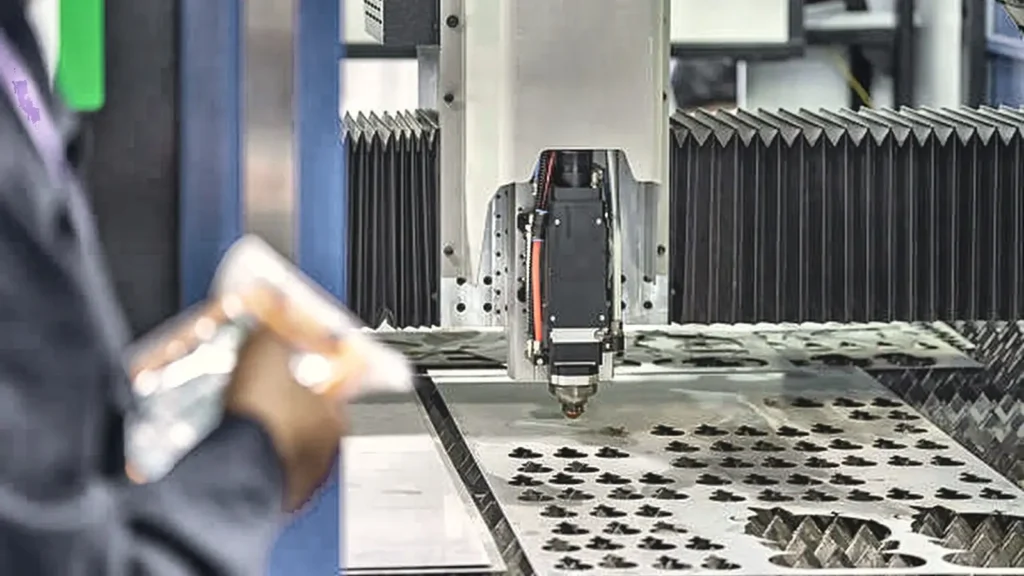
A well-configured CNC laser cutting machine can cut aluminum effectively under suitable conditions, but real samples are still necessary before final purchase.
Consider Machine Structure and Automation
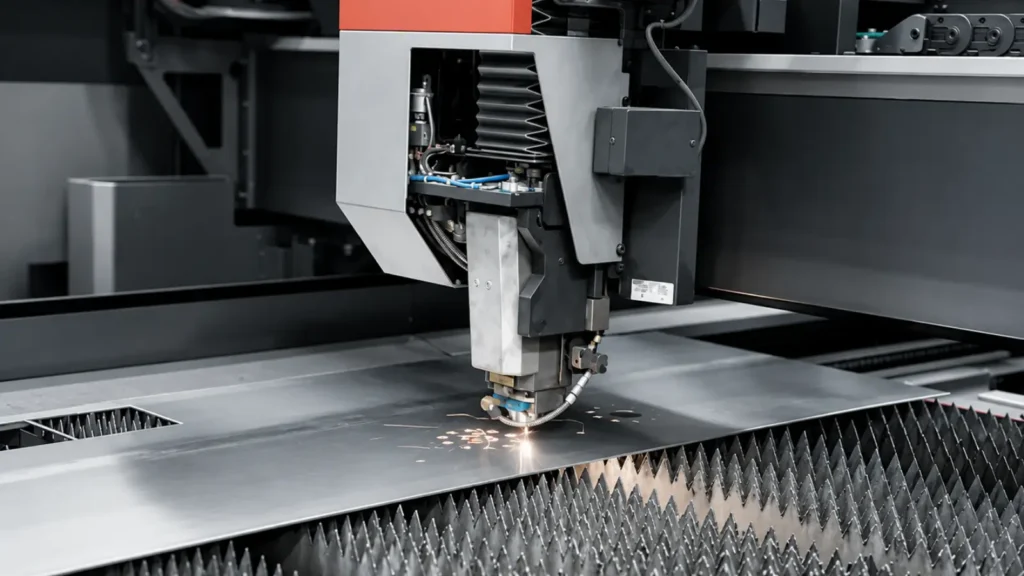
If your factory cuts aluminum occasionally, a standard sheet metal laser cutter may be enough. If aluminum is a major product, you should consider stronger configuration and workflow design.
Useful features include:
- Fully enclosed structure
- Exchange table
- Sectional dust extraction
- Automatic focusing cutting head
- Automatic nesting
- Automatic loading and unloading
- Stable gas supply
- Process database for aluminum cutting
For batch production, the exchange table can reduce waiting time and improve efficiency. Automation can also reduce manual handling and sheet surface scratches.
FAQ
Can fiber laser cut aluminum?
Yes. Fiber laser cutting can process aluminum sheets and some aluminum alloys under suitable machine configuration and process parameters.
Is aluminum harder to cut than carbon steel?
Yes. Aluminum is more reflective and conducts heat faster, so it requires better process control and suitable machine configuration.
Should I request aluminum sample cutting?
Yes. Sample cutting is strongly recommended because aluminum results depend on material grade, thickness, gas, and process settings.
Conclusion
An aluminum laser cutting machine should be selected carefully because aluminum is reflective and heat-conductive. The machine should have suitable laser source protection, stable cutting head, correct gas system, and tested cutting parameters.
Before buying, confirm your aluminum grade, thickness range, edge quality requirement, and sample cutting result. This is the safest way to choose a machine that can support stable aluminum production.